
Graston Technique® Therapy
in Oak Harbor, WA
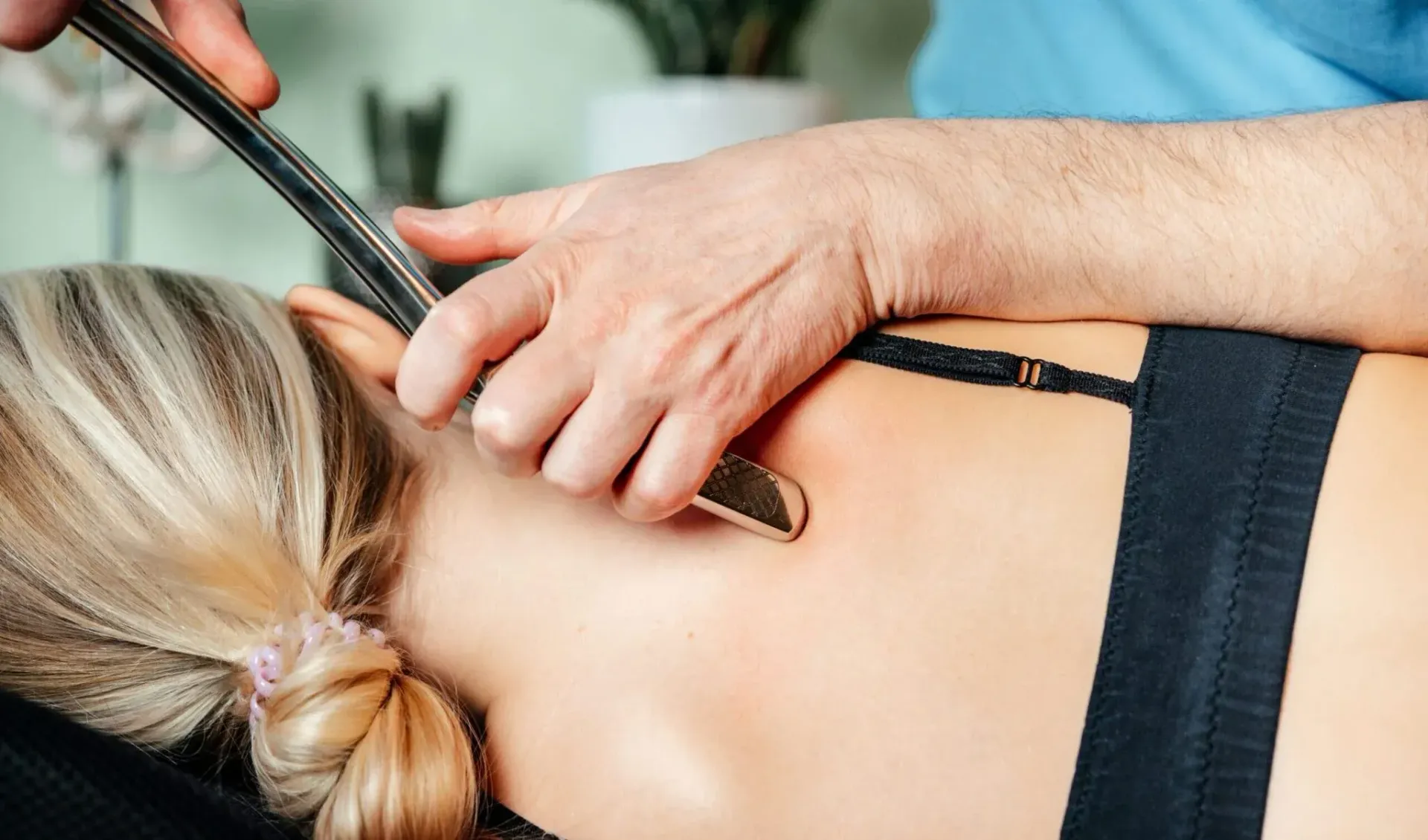
When soft tissue injuries and chronic muscle restrictions begin to affect your daily comfort and mobility, Instrument-Assisted Soft Tissue Mobilization (IASTM) can help target problem areas deep within the tissue. One of the most recognized forms of IASTM is the Graston Technique®, an advanced therapy designed to identify and treat scar tissue, adhesions, and fascial restrictions that may limit movement and contribute to pain.
At Bayshore Chiropractic, we use the Graston Technique® as part of a conservative, non-invasive approach to soft tissue care. This specialized treatment uses precision-crafted stainless steel instruments to gently break down restrictions, improve circulation, and encourage the body’s natural healing response.
Soft tissue injuries can develop from sports activities, repetitive motion, poor posture, auto accidents, or everyday wear and tear. These injuries often involve muscles, tendons, ligaments, and fascia, leading to stiffness, inflammation, and reduced range of motion. By combining hands-on chiropractic care with Graston Technique® therapy, we are able to help patients improve mobility, decrease pain, and support long-term recovery.
Graston Technique® is commonly used to help address:
- Muscle tightness and chronic tension
- Tendonitis and repetitive stress injuries
- Sports-related injuries
- Scar tissue restrictions
- Neck, shoulder, back, and hip pain
- Reduced flexibility and range of motion
Our goal is to help patients move more freely, recover faster, and return to the activities they enjoy with less discomfort and better function.
Graston Technique® Therapy in
Oak Harbor, WA
When soft tissue injuries and chronic muscle restrictions begin to affect your daily comfort and mobility, Instrument-Assisted Soft Tissue Mobilization (IASTM) can help target problem areas deep within the tissue. One of the most recognized forms of IASTM is the Graston Technique®, an advanced therapy designed to identify and treat scar tissue, adhesions, and fascial restrictions that may limit movement and contribute to pain.
At Bayshore Chiropractic, we use the Graston Technique® as part of a conservative, non-invasive approach to soft tissue care. This specialized treatment uses precision-crafted stainless steel instruments to gently break down restrictions, improve circulation, and encourage the body’s natural healing response.
Soft tissue injuries can develop from sports activities, repetitive motion, poor posture, auto accidents, or everyday wear and tear. These injuries often involve muscles, tendons, ligaments, and fascia, leading to stiffness, inflammation, and reduced range of motion. By combining hands-on chiropractic care with Graston Technique® therapy, we are able to help patients improve mobility, decrease pain, and support long-term recovery.
Graston Technique® is commonly used to help address:
- Muscle tightness and chronic tension
- Tendonitis and repetitive stress injuries
- Sports-related injuries
- Scar tissue restrictions
- Neck, shoulder, back, and hip pain
- Reduced flexibility and range of motion
Our goal is to help patients move more freely, recover faster, and return to the activities they enjoy with less discomfort and better function.
Graston Technique FAQs
What is the Graston Technique?
The Graston Technique is a specialized form of instrument-assisted soft tissue mobilization (IASTM) that uses stainless steel tools to detect and treat areas of scar tissue, muscle tightness, and soft tissue restrictions.
What conditions can the Graston Technique help treat?
Graston is commonly used for tendonitis, plantar fasciitis, neck pain, back pain, shoulder injuries, tennis elbow, carpal tunnel syndrome, scar tissue buildup, and sports-related injuries.
How does the Graston Technique work?
The instruments are gently moved across the skin to identify restricted areas in muscles and connective tissue. This process helps break down adhesions, improve circulation, and encourage the body’s natural healing response.
Is the Graston Technique painful?
Some patients experience mild discomfort during treatment, especially in areas with significant tightness or scar tissue. Mild redness or bruising may occur temporarily after treatment, but most patients tolerate the therapy well.
How long does a Graston treatment session take?
Treatment times vary depending on the area being treated, but Graston sessions are often incorporated into a regular chiropractic appointment and typically last between 10–20 minutes.
How many Graston treatments will I need?
The number of sessions depends on the severity and duration of the condition. Some patients notice improvement after only a few visits, while chronic injuries may require a longer treatment pl
Can athletes benefit from the Graston Technique?
Yes. Many athletes use Graston therapy to improve mobility, speed recovery, reduce muscle tightness, and help prevent injuries caused by repetitive motion or overuse.
Is the Graston Technique combined with other therapies?
Yes. Graston is often used alongside chiropractic adjustments, stretching, corrective exercises, massage therapy, and rehabilitation treatments to help improve overall results and recovery.