Built for the Bluff.
Engineered for the Shore.
Custom-designed beach access staircases for Whidbey Island's steepest coastal properties — safe, code-compliant, and built to last.
Steep Bluffs Demand More Than
a Standard Staircase
Beach access staircases on Whidbey Island's coastal bluffs involve far more complexity than a typical residential staircase. Active erosion, tidal saturation, root intrusion, freeze-thaw cycles, and seasonal storm activity all influence how each staircase must be designed and installed.
Every project begins with a careful evaluation of soil stability, structural anchoring, bluff geometry, and Washington shoreline permitting requirements. Depending on site conditions, anchoring methods may include pin piles, helical anchors, or other engineered foundation systems.
Sound Slope and Shoreline approaches every staircase as a custom engineering project—designing safe, durable access solutions that perform reliably in one of the Pacific Northwest's most demanding environments.
Bluff faces on Whidbey Island can exceed 80 feet of vertical drop.
Every staircase we build is engineered specifically for its site - not selected from a catalog.
Material and Design Options for Every Bluff
Every bluff presents unique engineering challenges. We select materials and staircase configurations based on bluff height, slope stability, shoreline exposure, site access, and long-term maintenance goals.

Aluminum
Marine-grade aluminum is lightweight, corrosion-resistant, and ideal for challenging coastal environments. It offers exceptional durability with minimal maintenance, making it the preferred choice for many waterfront stair systems.
Steel
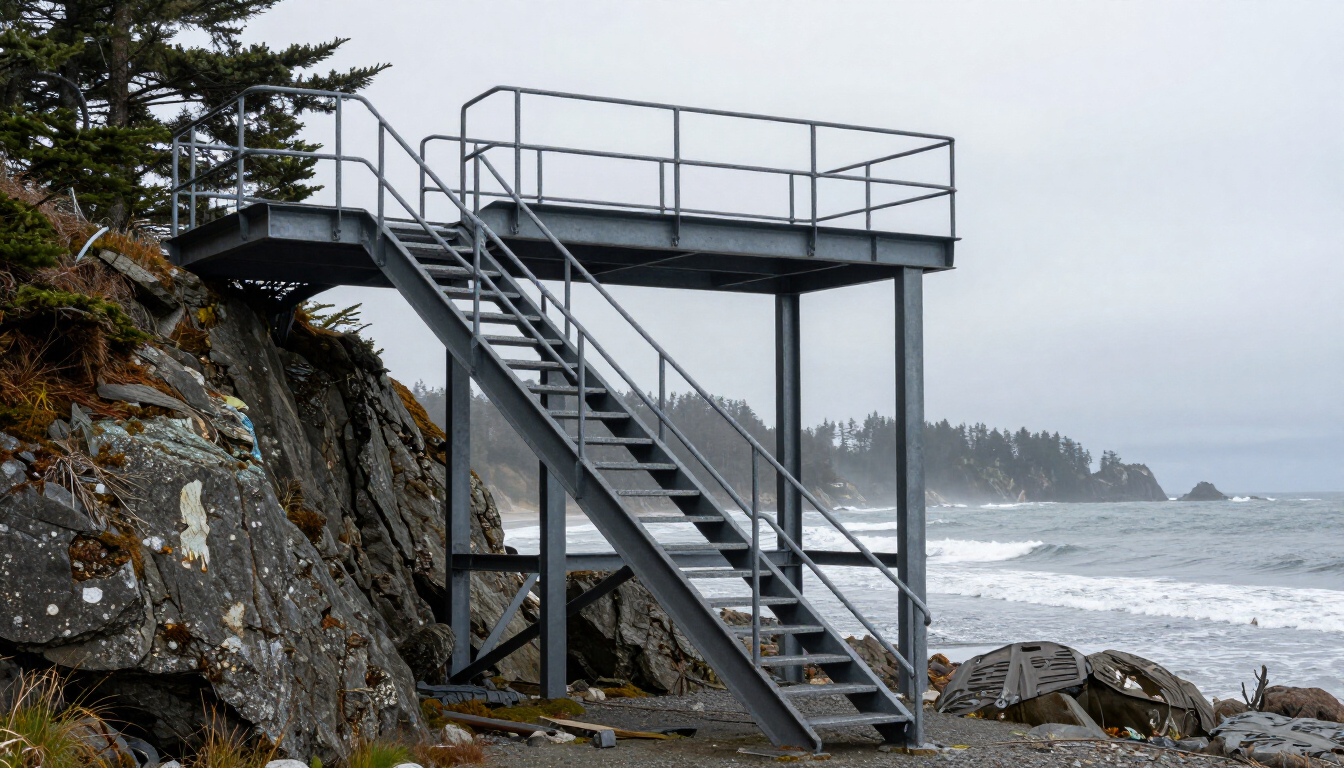
Galvanized or powder-coated steel delivers exceptional strength for tall bluffs, heavy-use stairways, and complex structural applications. Ideal where maximum rigidity and load capacity are required.
Treated Timber
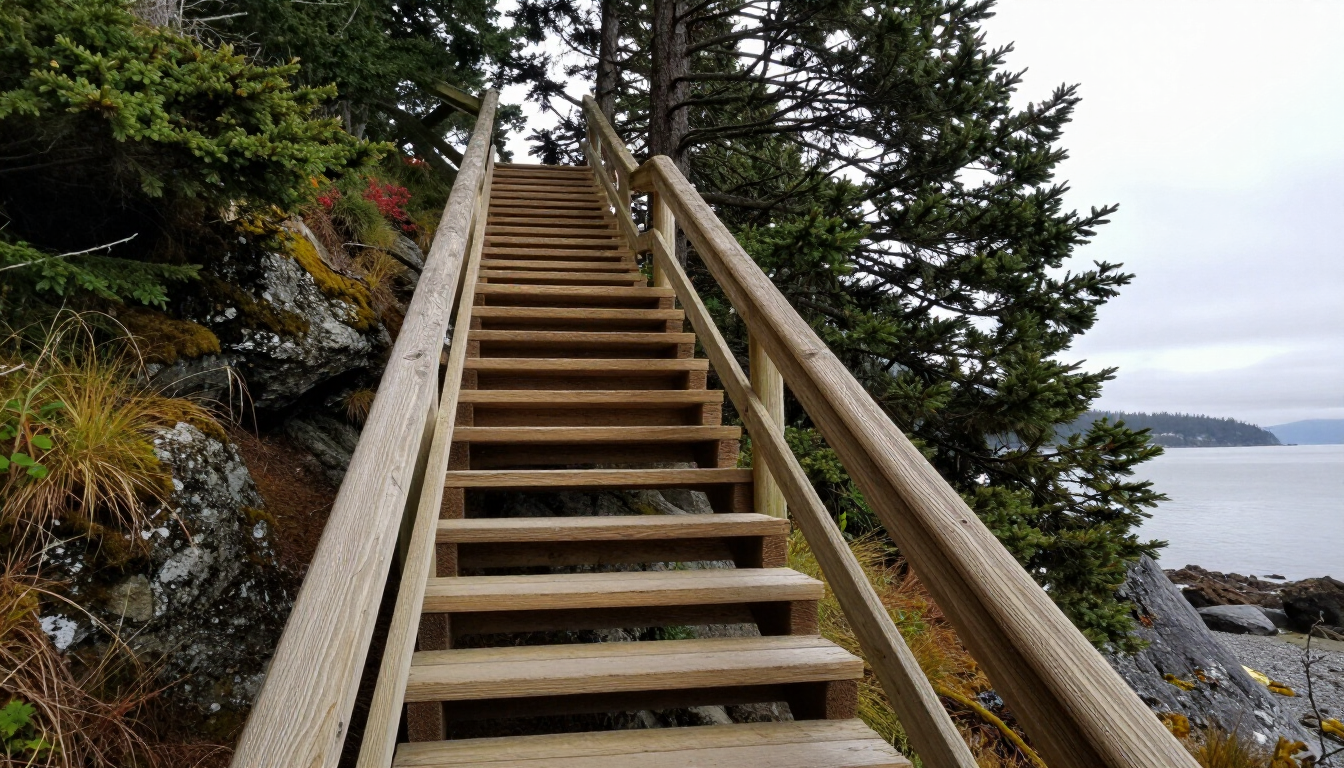
Pressure-treated timber blends naturally with coastal landscapes while providing dependable performance. Often selected for moderate bluff heights where aesthetics and environmental integration are priorities.
Straight-Run Staircases
Straight-run staircases are suited for bluffs with consistent grade and a direct line of access to the beach. This configuration offers the simplest installation process, the lowest material cost, and the most straightforward permitting pathway. Where site geometry allows, a straight run is our preferred approach for efficiency and structural predictability.
Switchback Stair Systems
Very tall or irregularly faced bluffs — where a straight run is not feasible due to grade changes, vegetation, or soil instability — benefit from switchback or multi-landing designs. These configurations allow rest points at intermediate landings and can incorporate storage lockers or gear stations at mid-bluff, improving usability while managing structural loading across the bluff face.
Beach Access Staircases — Project Gallery
Explore completed beach staircase projects throughout Whidbey Island and the greater Puget Sound region.
Every installation reflects site-specific engineering, environmental conditions, and custom design solutions.

Beach Access Stairway
Whidbey Island
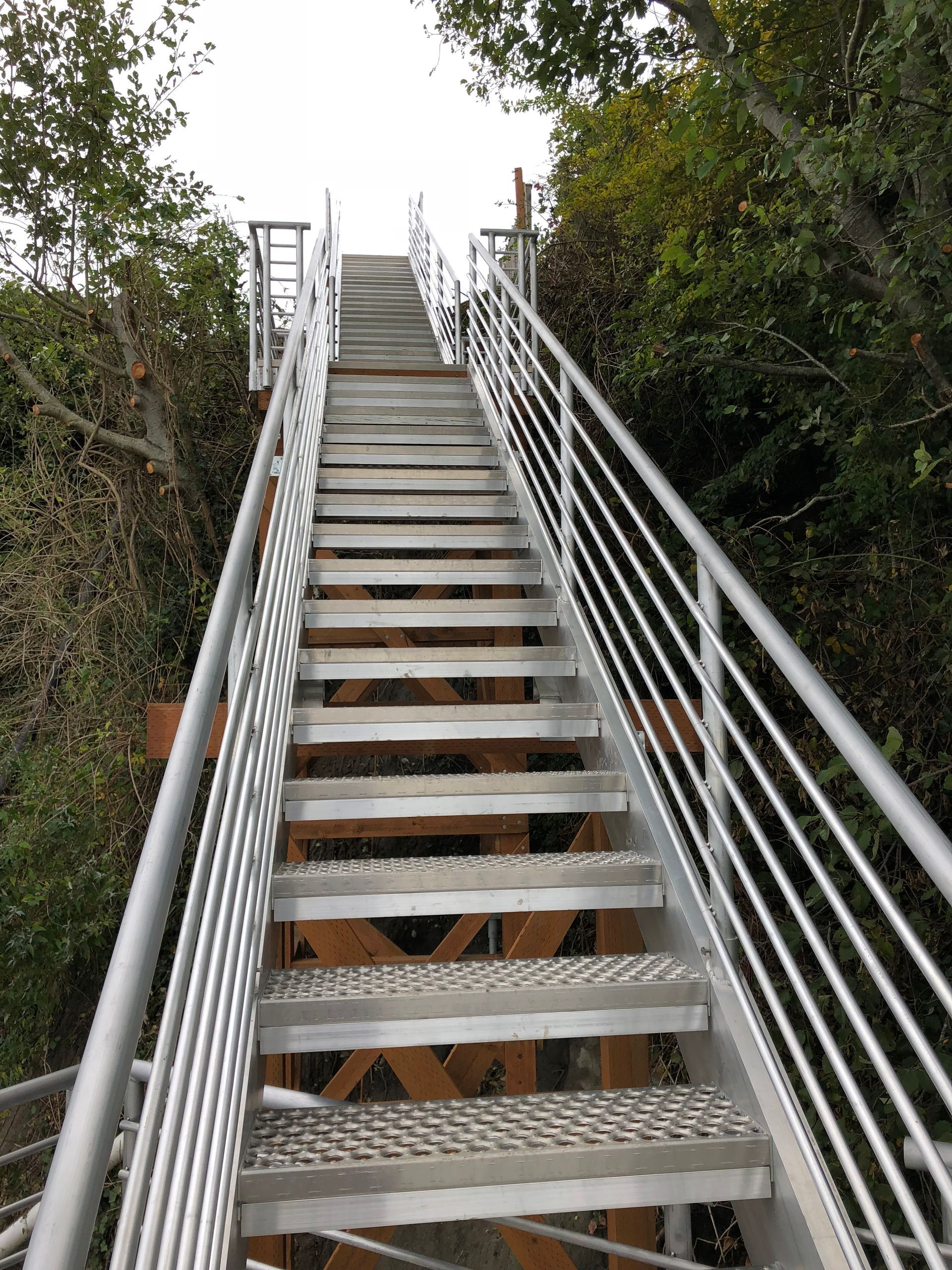
Beach Access Stairway
Whidbey Island
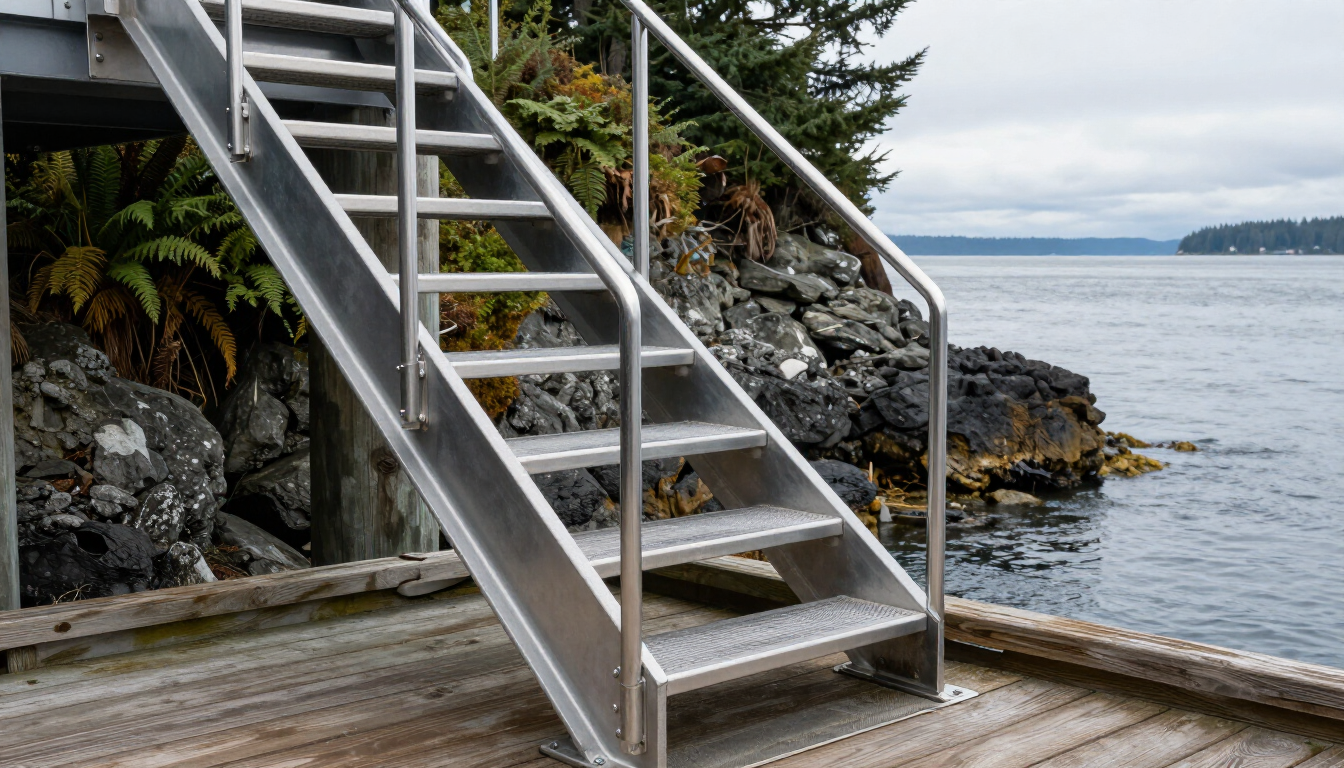
Beach Access Stairway
Whidbey Island

Beach Access Stairway
Whidbey island

Beach Access Stairway
Whidbey Island
Beach Access Stairway
Whidbey Island
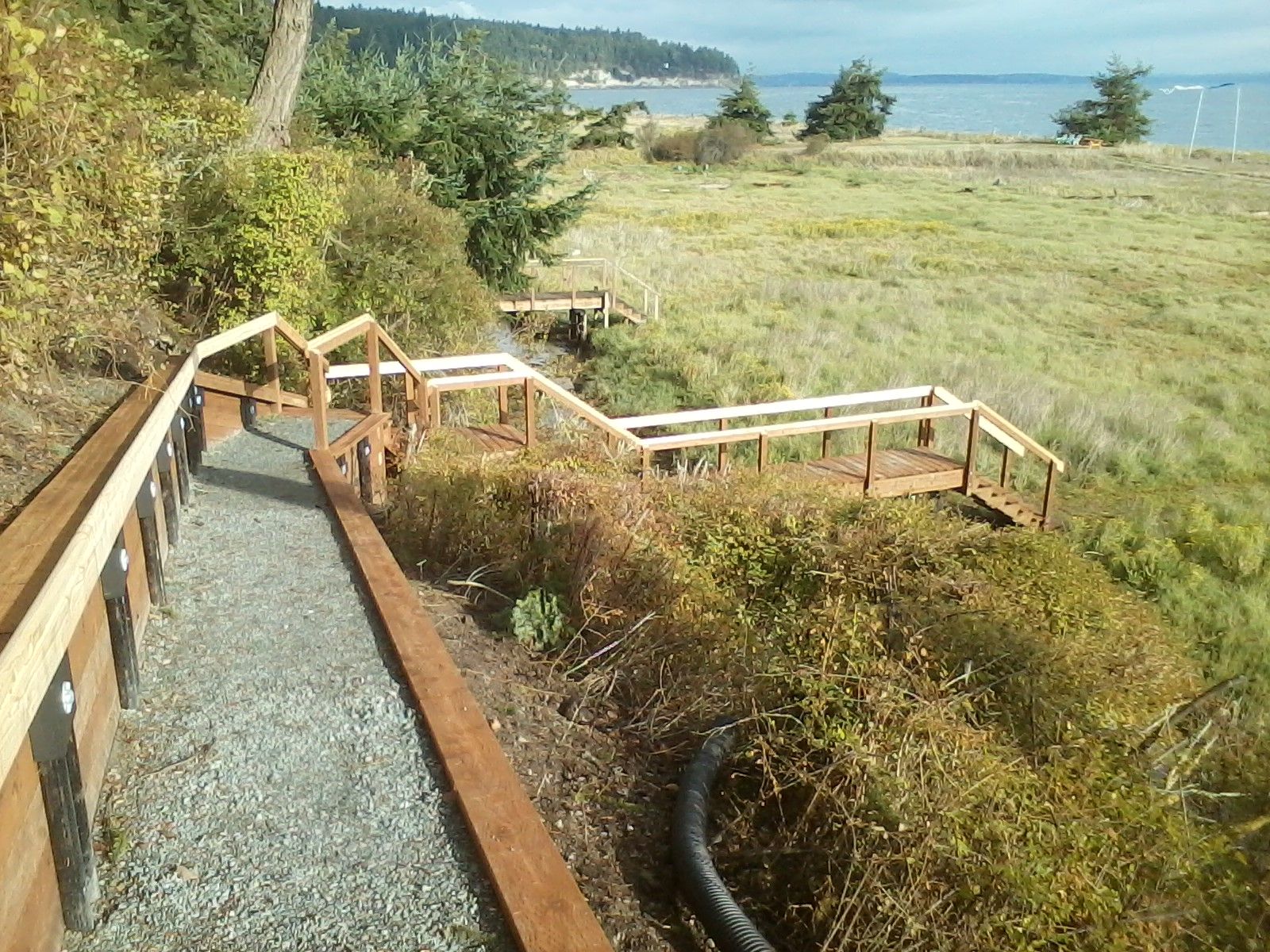
Nature Area Access Stairs
Whidbey Island
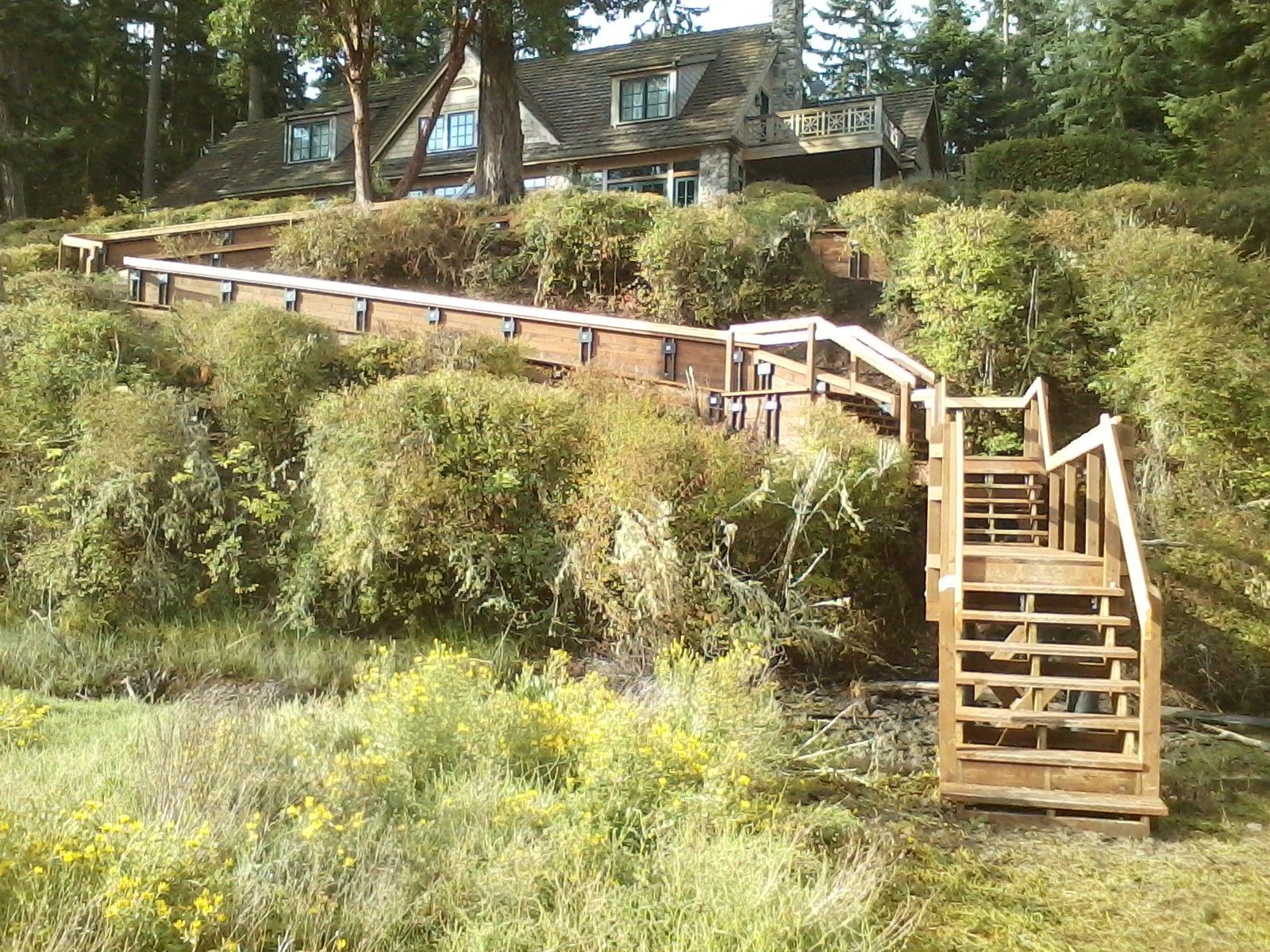
Nature Area Acdess Stairway
Whidbey Island

Beach Access Stairway
Whidbey Island
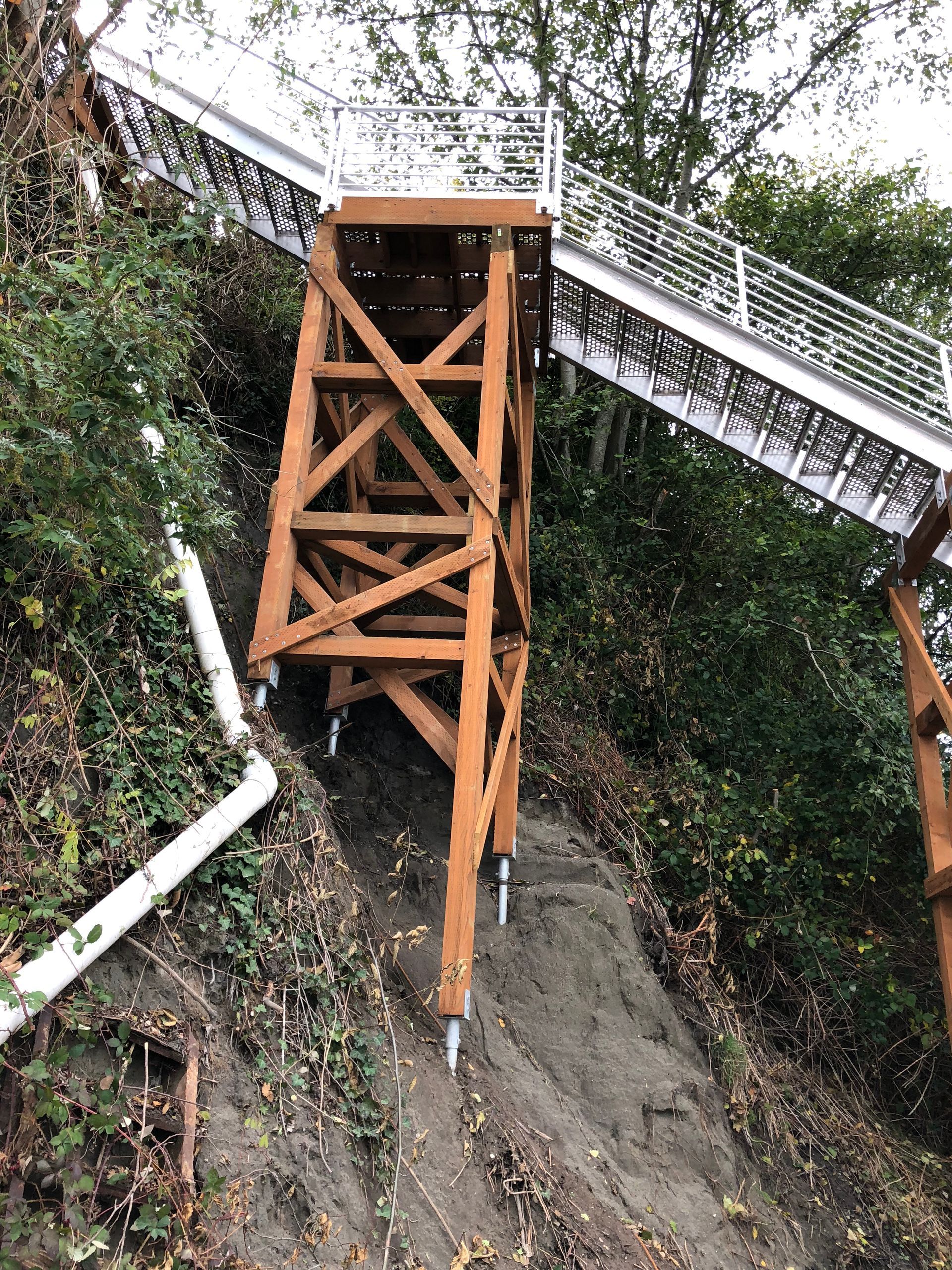
Beach Access Stairway
Whidbey Island
Frequently Asked Questions About Beach Access Staircases
Permitting, materials, maintenance, and integration with broader shoreline work —
here are the questions we hear most often from Whidbey Island property owners.
Do I need a permit to build a beach access staircase on my bluff property?
Most projects require permits due to shoreline regulations and environmental considerations. Sound Slope and Shoreline works with property owners and engineers to help navigate the permitting process and ensure every staircase meets local and state requirements.Yes — beach access staircases on shoreline properties in Washington State typically require a Shoreline Substantial Development Permit or a Shoreline Exemption depending on project cost and scope. Some counties also require a building permit for structural stair systems. Sound Slope and Shoreline coordinates with local planning departments and can work with your engineer or land-use consultant to ensure the permit package is complete before construction begins.
How long does a beach staircase last, and what maintenance is required?
SThe lifespan depends on the materials, environment, and maintenance schedule. Marine-grade aluminum offers exceptional longevity with minimal maintenance, while treated timber and steel systems should be periodically inspected and maintained to maximize service life.
Can my staircase be removed seasonally for storm protection?
Yes. Certain staircase systems can be engineered for seasonal removal when required by shoreline permits or property conditions. We evaluate each site to determine the best long-term solution for your shoreline.
How is the staircase anchored to the bluff without damaging the face?
Every installation is engineered specifically for the site's geology and slope conditions. Depending on the project, we may use helical anchors, pin piles, retaining systems, or other engineered foundation methods designed to provide stability while minimizing disturbance to the bluff.
Can you integrate the staircase with existing or new shoreline stabilization work?
Absolutely. Our team regularly coordinates staircase construction with seawalls, retaining walls, helical anchor systems, docks, gangways, drainage improvements, and other shoreline stabilization projects to create one integrated solution.bsolutely — in many cases, the beach access staircase is designed and installed as part of a broader shoreline stabilization project. The staircase footprint and anchor locations are coordinated with any rock armor, bulkhead, or bioengineered shoreline treatment at the toe of the bluff. Integrated design reduces permitting complexity and ensures the staircase and stabilization work perform as a system over time.
Let's Build Your Beach Access Solution
Every waterfront property is unique. We evaluate bluff height, soil conditions, shoreline exposure, and permitting requirements before recommending the right access solution for your site. Contact us today to schedule a consultation.
Serving waterfront property owners throughout Whidbey Island and Puget Sound.