Engineered Walls for Unstable Ground
Pin pile and anchor retaining wall systems designed for steep coastal bluffs and waterfront slopes — built to hold.
Why Pin Pile and Anchor Systems?
Steep waterfront slopes are constantly under pressure from saturated soils, wave action, and gravity. When those forces exceed what the soil can support, slopes begin to move—putting homes, roads, and shoreline structures at risk.
Pin pile and anchor retaining systems transfer those loads into stable soils below the surface, creating a permanent engineered solution for challenging bluff and waterfront properties.
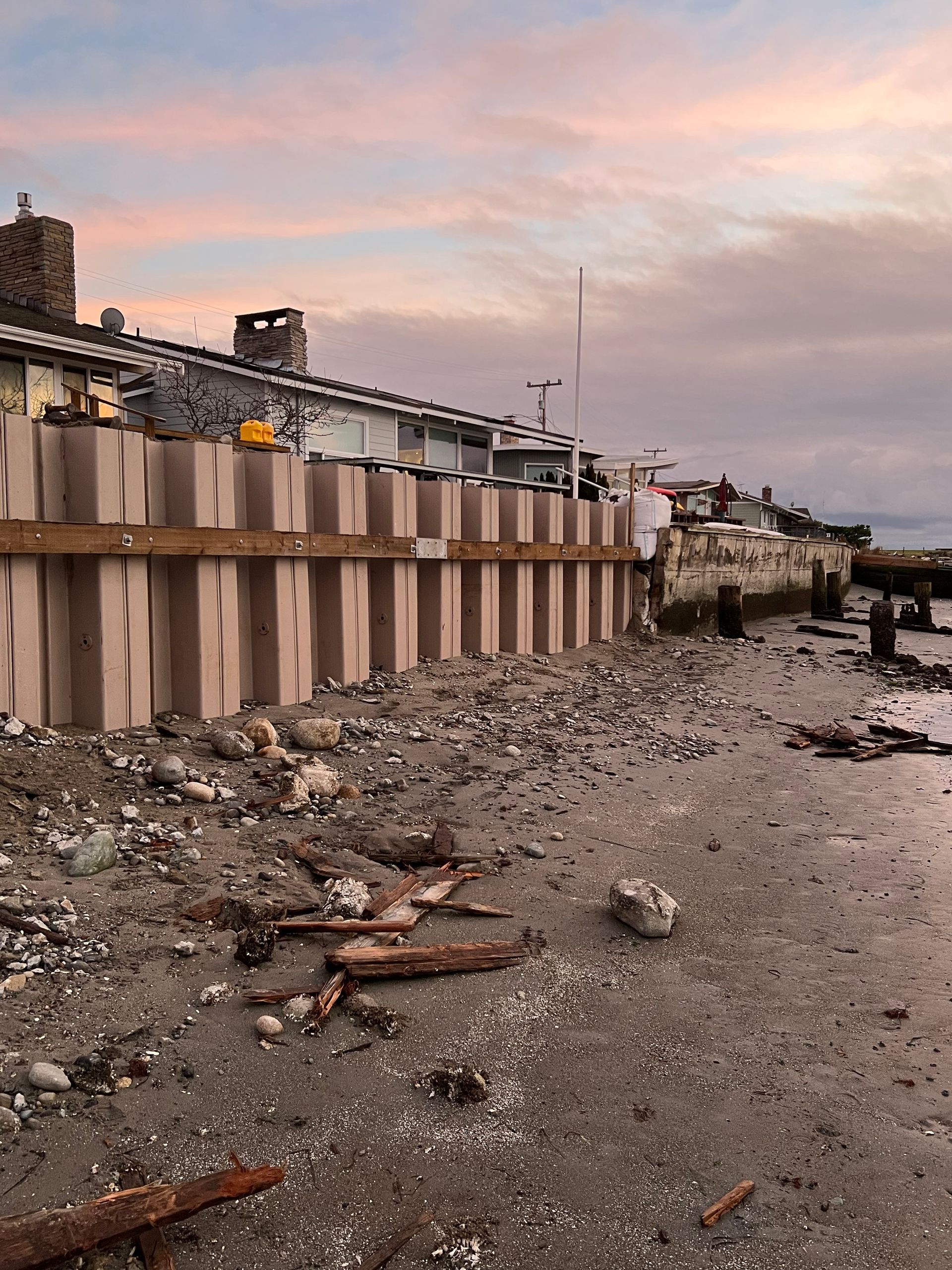
Lateral load Transferred.
Slope secured. Property protected.
Transfers loads into stable soils
Designed for marine environments
Permanent stabilization solution
Retaining System Options
Sound Slope and Shoreline engineers and installs the full range of retaining systems, matched to soil conditions, slope angle, load requirements, and site access constraints.
Pin Pile Walls
Steel H-piles or pipe piles driven to refusal, with timber or steel lagging installed between piles to retain the soil face. Suited for steep cuts and bluff edges where deep bearing capacity is required.
Anchor Tieback Systems
High-tension anchor rods or cables drilled and grouted into stable soil or rock behind the wall face, providing tensile restraint against lateral earth pressure. Used where additional horizontal capacity is needed.
Deadman Anchor Systems
Buried anchor blocks connected by tie rods to the wall face — a proven passive-resistance solution for walls in granular soils and beach-adjacent settings.
Timber Lagging
Structural timber planks installed horizontally between pin piles to form the retained face. Can be treated for marine exposure and integrated with drainage layers behind the wall.
Hybrid Configurations
Custom combinations of piles, anchors, lagging, and geosynthetic elements engineered for complex sites with mixed soil profiles, high groundwater, or irregular slope geometry.
Soldier Pile Systems
Closely spaced vertical piles with continuous lagging or shotcrete facing for high-load urban or bluff-edge applications requiring a tighter retained face.
From Assessment to Completed Wall
Every retaining wall installation begins with a methodical evaluation and concludes with a system built to perform for decades — no shortcuts, no guesswork.
Step 01
Site Assessment & Engineering Review
We evaluate your site, review soil conditions, engineering requirements, and permitting needs before any construction begins.
Step 02
Pile Layout & Equipment Mobilization
Equipment is mobilized and the project is laid out according to the engineered plan.
Step 03
Pile Driving & Anchor Installation
Piles and anchors are installed to specification, creating the structural support that stabilizes the slope.
Step 04
Drainage, Backfill & Inspection
Drainage, structural backfill, inspections, and final restoration complete the project.
Retaining Wall Installations
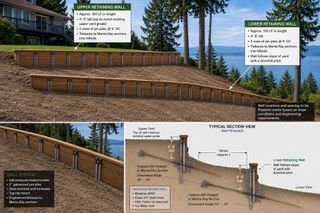
Pin Pile Retaining Wall
Whidbey island

Pin Pile Retaining Wall
Whidbey island
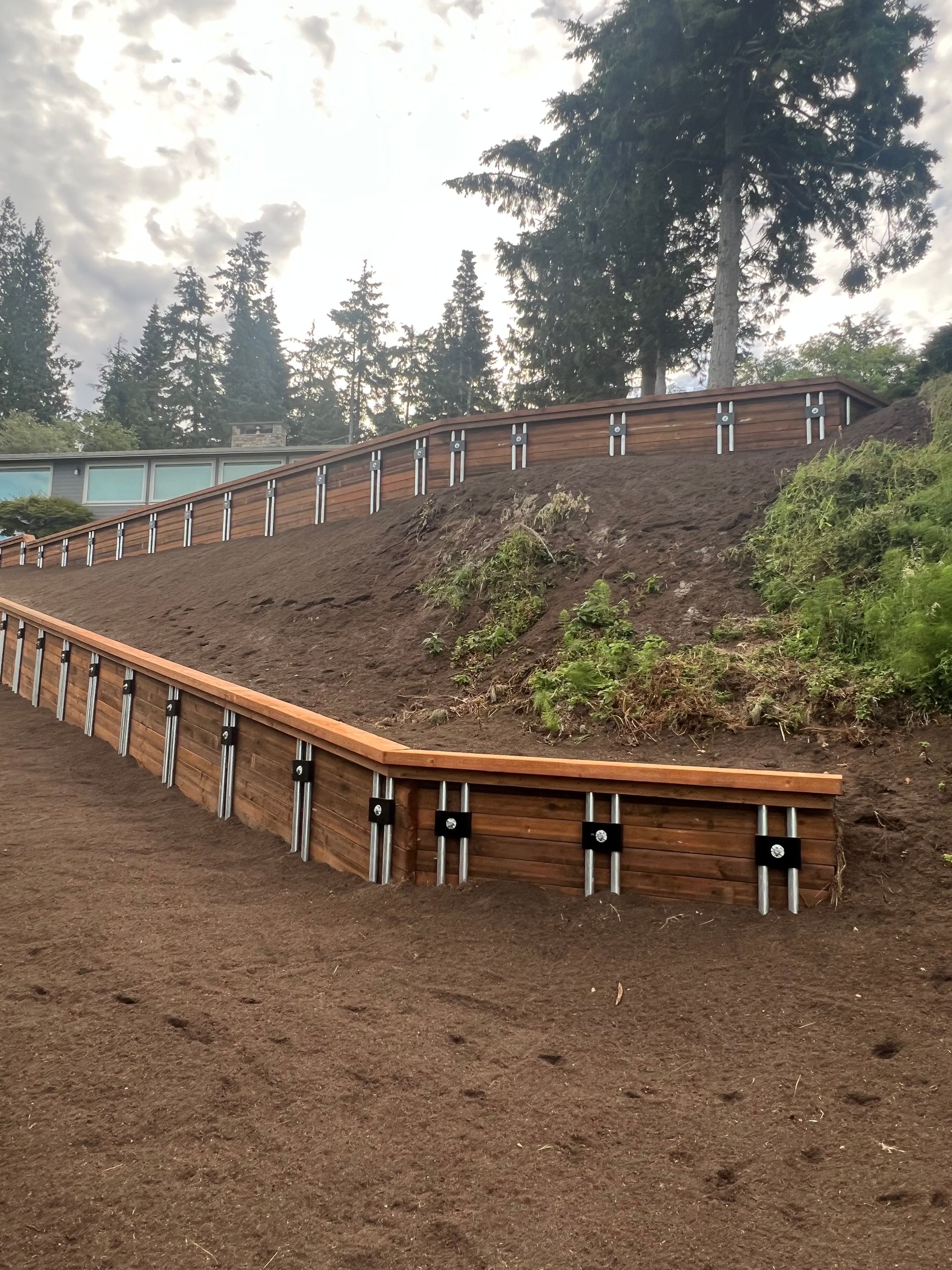
Pin Pile Wall Retaining Wall
Whidbey island
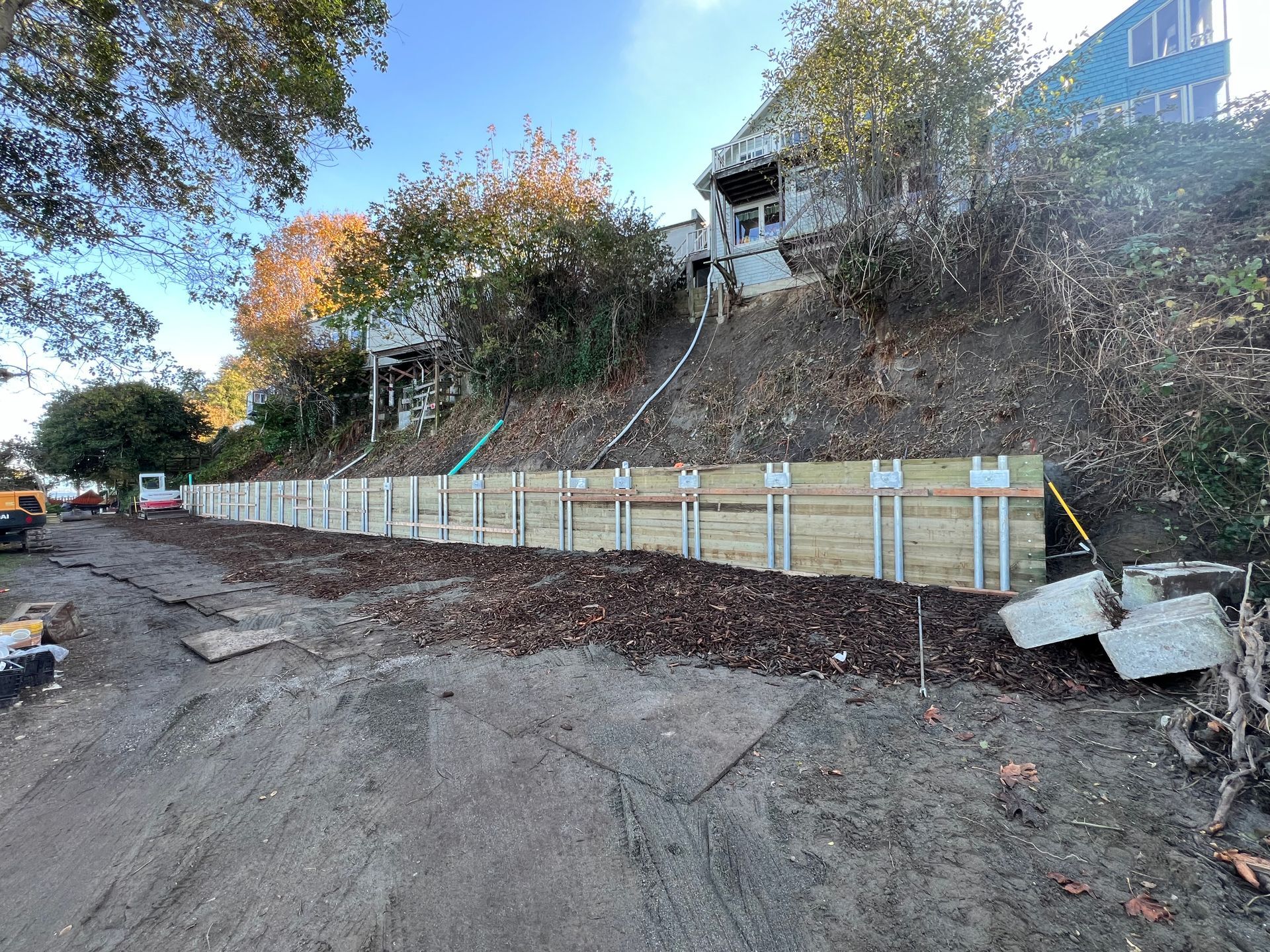
Pin Pile Retaining Wall
Whidbey Island
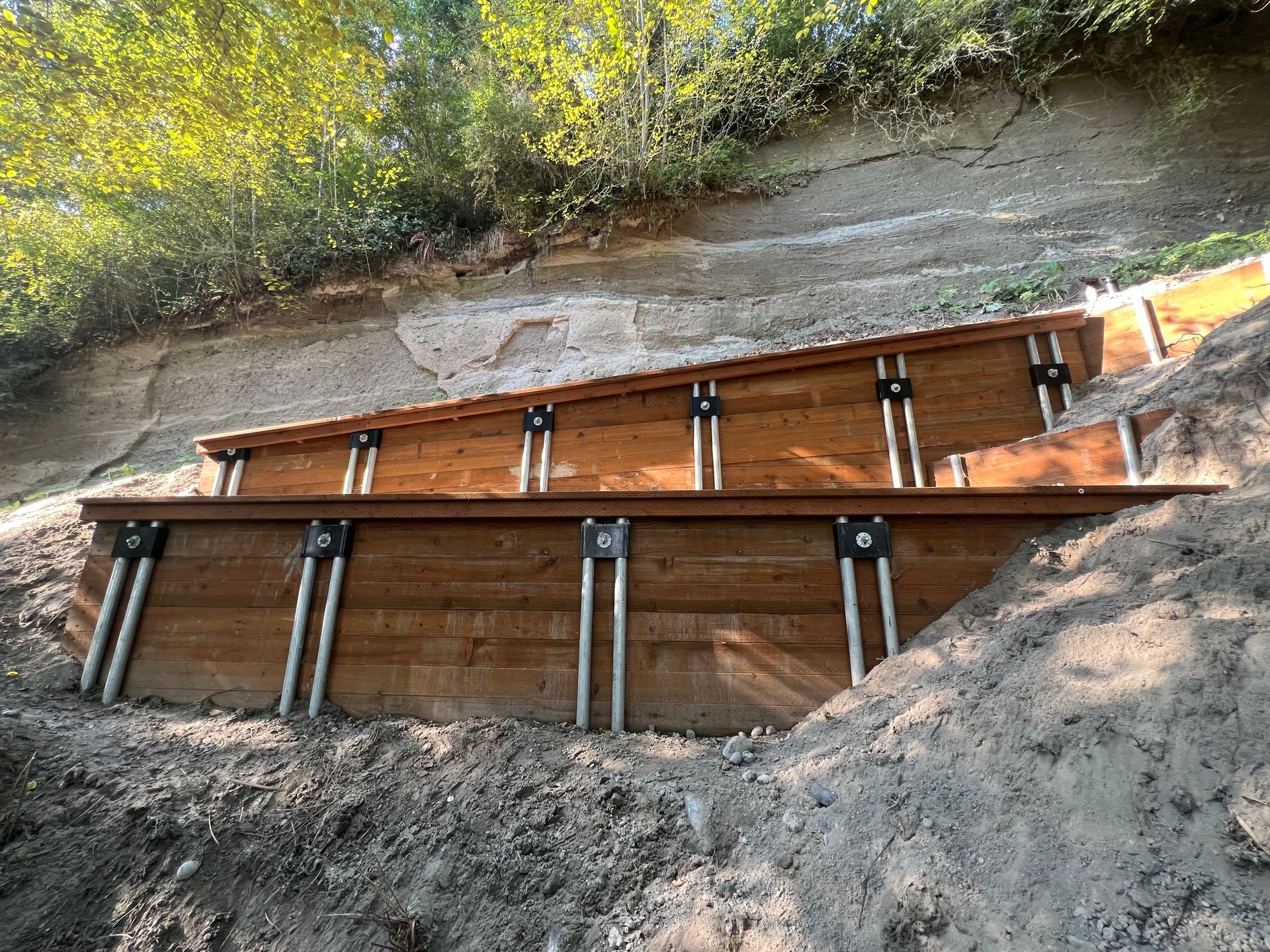
Pin Pile Retaining Wall
Whidbey island

Pin Pile Retaining Wall
Whidbey Island
Frequently Asked Questions About Retaining Walls
Answers to the questions we hear most before a retaining wall project begins.
How do I know if my slope needs a retaining wall vs. another stabilization method?
A retaining wall is typically needed when a slope is actively failing or at high risk of failure due to steep angle (greater than ~1.5:1), weak or saturated soils, or wave undercutting at the base. Shallower slopes or erosion-only problems may be addressed with bioengineering, rip-rap, or drainage improvements. A site assessment will identify the right approach — Sound Slope and Shoreline evaluates each slope individually before recommending a system.What permits are required for a retaining wall on a coastal property?
Coastal retaining walls typically require local building permits, Shoreline Substantial Development Permits (or exemptions), and often a Hydraulic Project Approval (HPA) from WDFW when work is within or near the ordinary high water mark. Sound Slope and Shoreline coordinates permit documentation and agency submittals as part of the project process.How long does an engineered pin pile retaining wall last?
Properly designed and installed pin pile retaining walls in marine and coastal environments are engineered for a 50-year or greater service life. Galvanized or epoxy-coated steel piles, treated timber lagging, and quality drainage detailing are all factors that extend longevity. Periodic inspection — every 5 to 10 years — is recommended to check anchor tension, drainage function, and corrosion status.Does the wall require ongoing maintenance?
Maintenance is minimal compared to the consequences of slope failure. Recommended maintenance includes periodic inspection of drainage outlets for blockage, checking tie rod and anchor hardware for corrosion, and monitoring the wall face for any signs of movement or seepage. Most well-installed systems perform without major intervention for decades.Can a retaining wall be installed from the water side using a barge?
Yes. Many coastal bluff sites on Whidbey Island and Puget Sound have limited or no land access, making marine-access installation the only practical approach. Sound Slope and Shoreline operates its own barge and marine equipment, allowing pile driving and wall installation directly from the water without disturbing upland access or neighboring properties.
Is Your Slope Secure?
Coastal bluffs and waterfront slopes on Whidbey Island face constant pressure from groundwater, wave action, and seismic forces. Sound Slope and Shoreline conducts site assessments to evaluate slope stability and recommend the right engineered solution — whether that's a pin pile wall, an anchor system, or a hybrid approach. Reach out to start a conversation.
Or call us directly