Pin Pile Driving
Precision pile installation for docks, marine structures, and waterfront projects throughout Puget Sound.
The Foundation Method Built for Waterfront Conditions
Pin pile driving is a deep-foundation method that transfers structural loads through unstable soils into competent bearing layers below. It's the preferred solution for docks, marine structures, retaining walls, and challenging waterfront sites.
Pin piles are ideal for tidal flats, steep shorelines, saturated soils, and sites where traditional foundations aren't practical. With barge-mounted equipment and extensive marine construction experience, Sound Slope and Shoreline installs engineered pile systems throughout Whidbey Island and Puget Sound.
30+ ft Deep
Typical pile penetration in Puget Sound tidal soils.
Barge-Mounted
Equipment enabling access to over-water and tide-flat sites with no land staging required.
Marine Engineered
Designed for demanding waterfront conditions.
Common Pin Pile Applications
Pin pile foundations are specified wherever surface soils cannot reliably bear structural loads — particularly at the waterfront. Sound Slope and Shoreline drives piles for the following structure types across Whidbey Island and surrounding marine waters.
Docks & Piers
Driven steel piles provide the structural anchoring for fixed docks and piers, resisting lateral loads from wave action, vessel impact, and tidal fluctuation.
Gangways & Float Systems
Battered and plumb piles establish the fixed reference point for hinged gangway systems, ensuring consistent access regardless of tidal range.
Pin Pile Retaining Walls
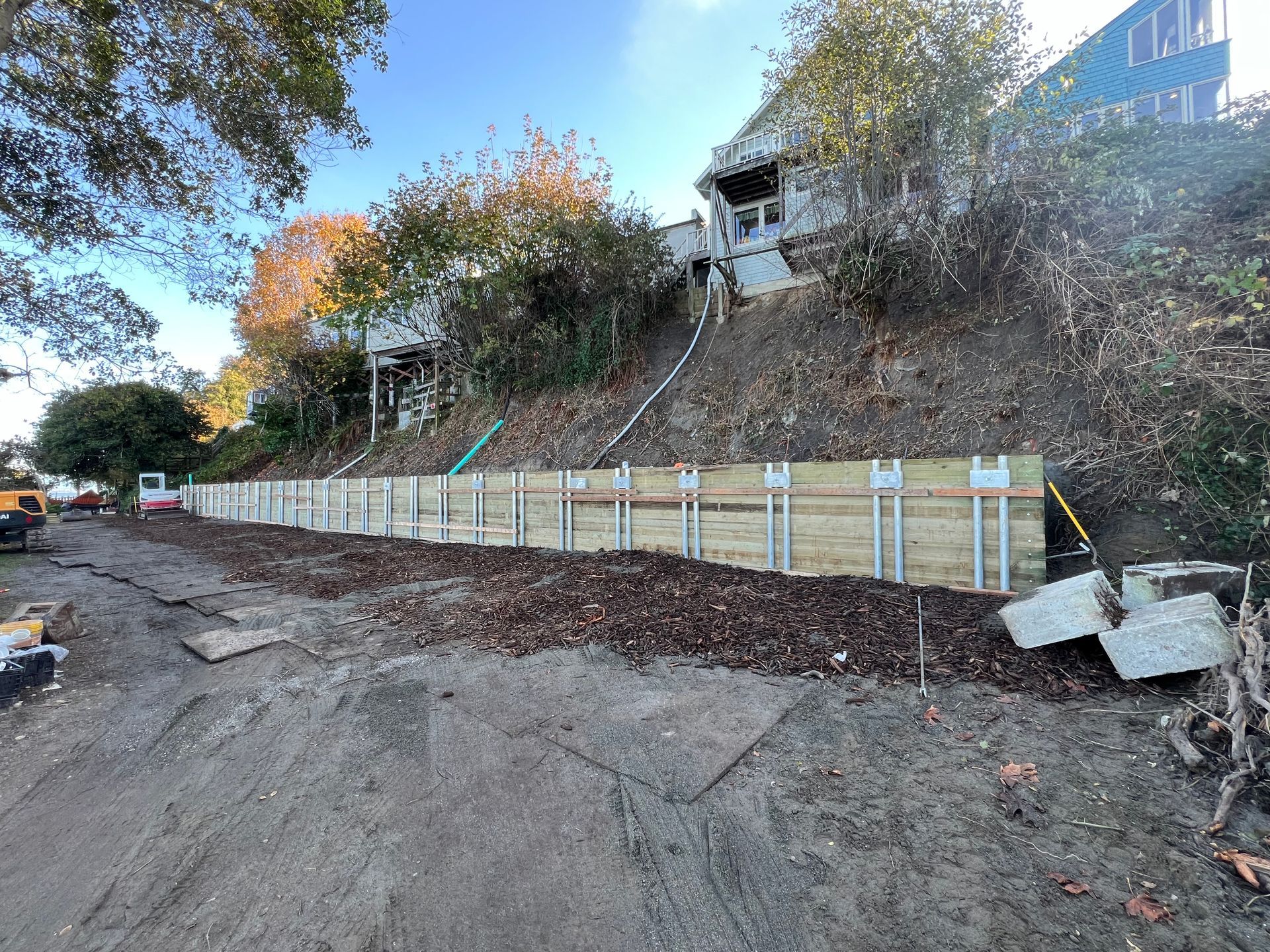
Closely spaced driven piles form a continuous soldier-pile wall to stabilize eroding shoreline banks and steep slopes under marine loading conditions.
Boathouses & Marine Structures
Pile-supported platforms and boathouse foundations require penetration into competent soil well below scour and seasonal storm-surge depth.
Marine Platforms & Landings
Work platforms, fish cleaning stations, and tidal landings all demand pile foundations when placed over water or on intertidal slopes.
Slope & Embankment Support
Driven piles resist slope creep and rotational failure on steep waterfront properties, used in combination with tiebacks and drainage systems.
Completed Pin Pile Projects
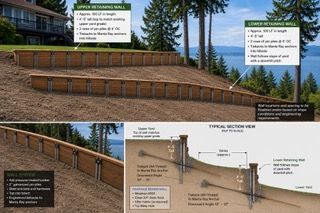
A selection of completed pin pile installations throughout Whidbey Island and Puget Sound, showcasing docks, retaining walls, shoreline protection, and marine foundations.



Frequently Asked Questions About Pin Pile Driving
Find answers to the questions property owners ask most about permits, pile materials, environmental timing, and marine construction.
What permits are required for marine pile driving in Washington State?
Marine pile driving in Washington typically requires a Hydraulic Project Approval (HPA) from Washington Department of Fish and Wildlife, a shoreline substantial development permit or exemption from the local jurisdiction, and in some cases a U.S. Army Corps of Engineers Section 10/404 permit for work below the ordinary high water mark. Sound Slope and Shoreline coordinates with permit agencies and can advise on the applicable review process for your specific site and structure type.Are there seasonal or environmental timing restrictions on pile driving?
Yes. Washington State's HPA program establishes in-water work windows to protect salmon migration, spawning, and rearing periods. For most Puget Sound locations, the primary work window for in-water construction runs from July 16 through January 15, though site-specific windows vary. Planning your project with adequate lead time for permit processing ensures your installation falls within the allowable window.What pile materials does Sound Slope and Shoreline use?
The majority of marine installations use schedule-40 or schedule-80 steel pipe piles, selected for their strength-to-diameter ratio and weldability. Pile diameter is specified by the structural engineer of record based on design loads, soil bearing capacity, and pile spacing. In some applications, timber piles or composite piles may be specified — Sound Slope and Shoreline works from the engineer's drawings and sources materials accordingly.How are load specifications and pile depth determined?
Pile depth and diameter are determined by a licensed geotechnical or structural engineer based on a site-specific soil investigation (borings or CPT), the design loads from the supported structure, and applicable building code requirements. Sound Slope and Shoreline installs piles to the engineer's specified refusal criteria — typically a minimum blow count per foot using a calibrated hammer — and documents installation data for the engineer's review and approval.How long does a pin pile foundation last?
Most engineered steel pin pile foundations are designed to provide 50+ years of reliable service. Lifespan depends on site conditions and proper engineering, but when installed correctly, pin piles offer one of the most durable foundation solutions for waterfront structures and shoreline stabilization.
Ready to Start Your Project?
Whether you're building a dock, retaining wall, marine platform, or other waterfront structure, Sound Slope and Shoreline has the experience and equipment to get your project started. Contact us today to schedule a site assessment.