Dock & Gangway Construction
Engineered for Puget Sound's tidal range, wave action, and long-term marine performance — fixed piers, floating docks, and aluminum gangways designed for Whidbey Island waterfront properties.
Built for the Demands of Puget Sound
Puget Sound is one of the most demanding marine construction environments on the West Coast. Strong tidal fluctuations, wave action, corrosive saltwater, and strict permitting requirements demand engineered dock and gangway systems designed specifically for waterfront conditions.
Sound Slope and Shoreline designs every dock, gangway, and access system to perform safely through changing tides while meeting Washington's environmental and structural requirements.
14+ ft
Typical Puget Sound tidal range
Every dock is engineered to perform from low tide to high tide.
Dock & Gangway Systems We Build
Sound Slope and Shoreline constructs a full range of dock and gangway configurations for residential and commercial waterfront properties on Whidbey Island and throughout Puget Sound. Each system is engineered to the specific tidal, substrate, and use conditions of the site.
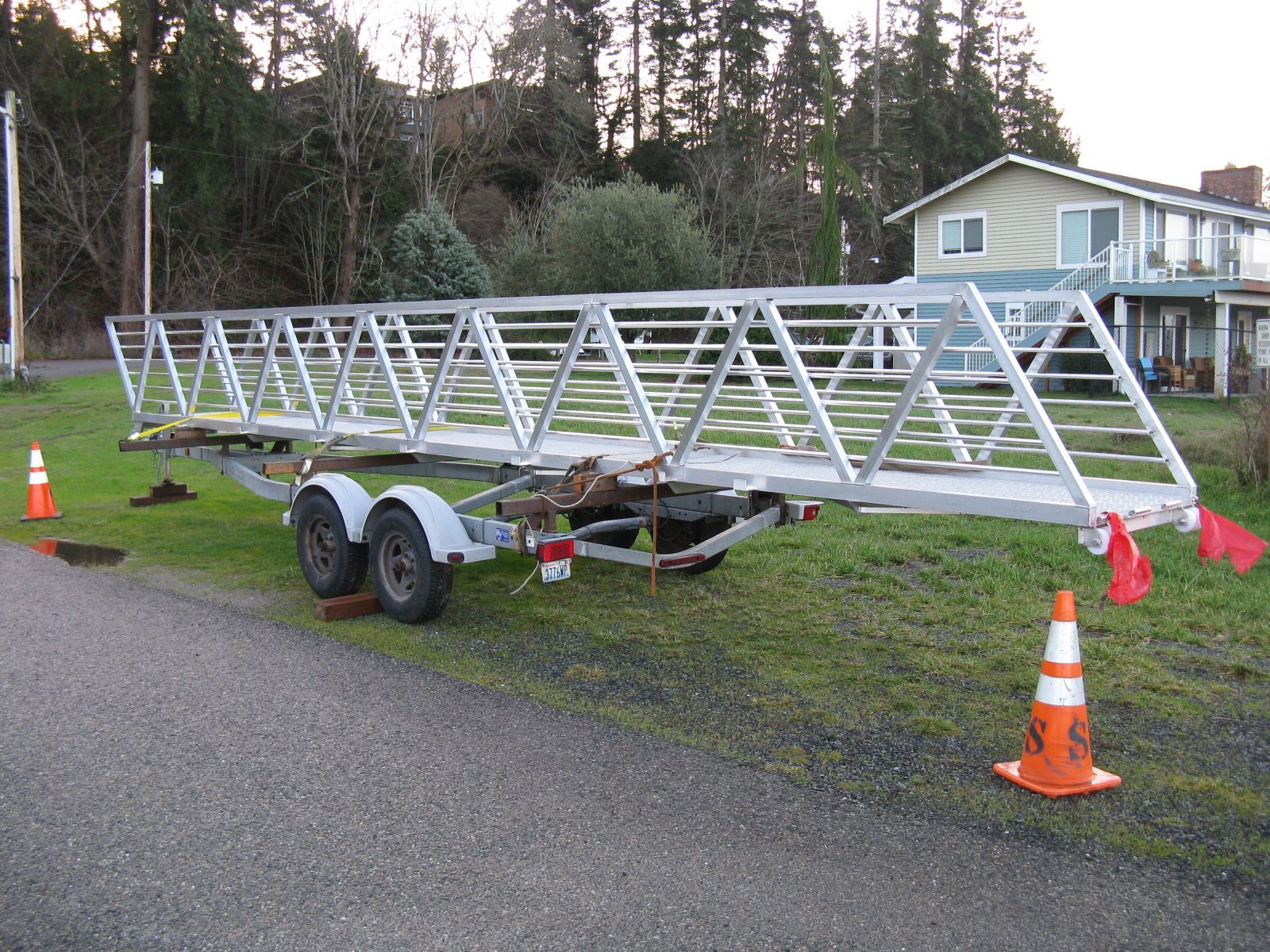
Aluminum Gangways
Lightweight, corrosion-resistant aluminum gangways engineered with the correct slope, width, and handrail geometry for the full tidal range. Available in fixed and adjustable configurations.
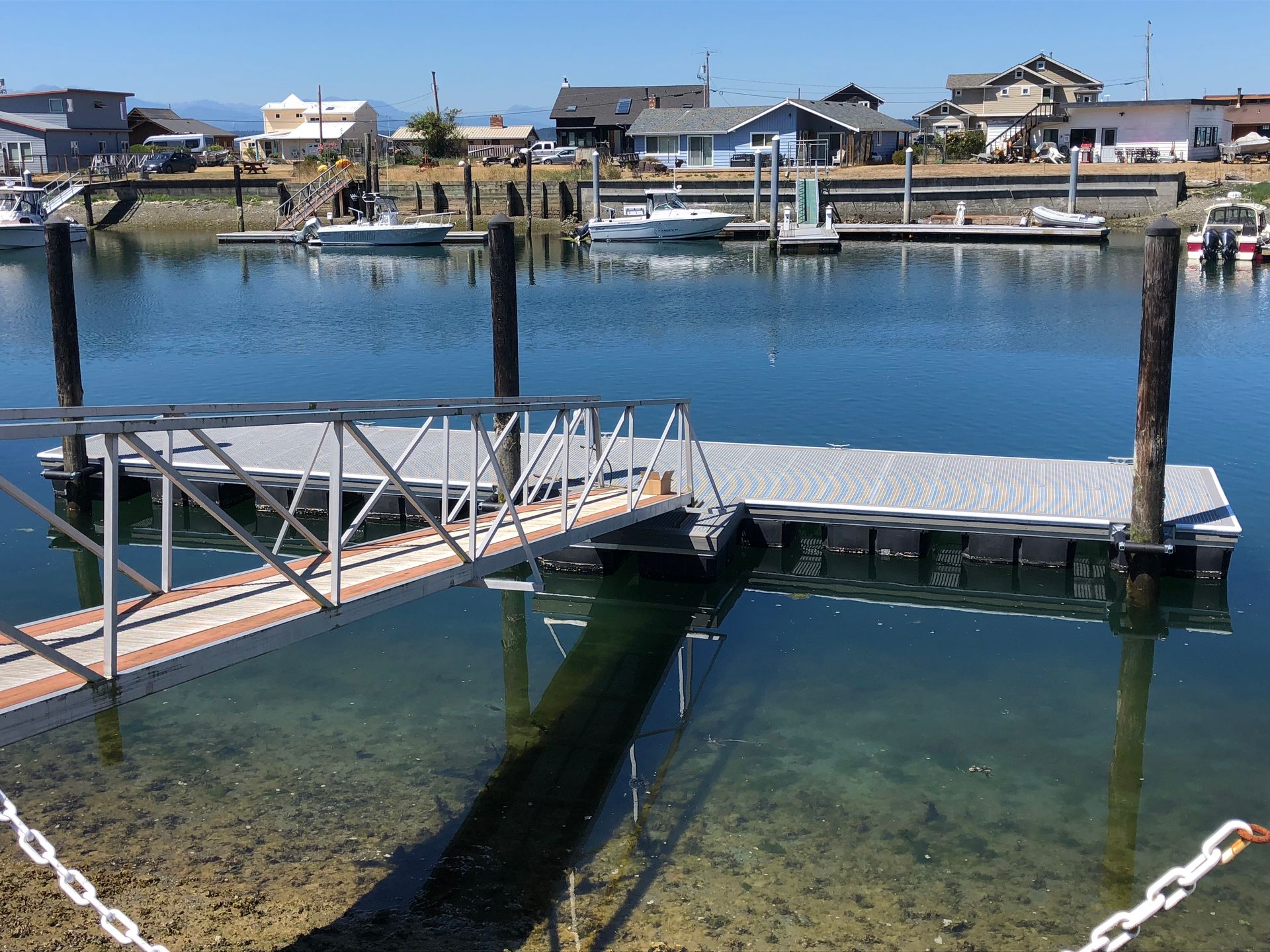
Floating Docks
High-density polyethylene or aluminum-frame floating dock sections anchored to pin piles or spuds. Float systems track the tide smoothly and are sized for the vessel type, mooring loads, and site exposure.
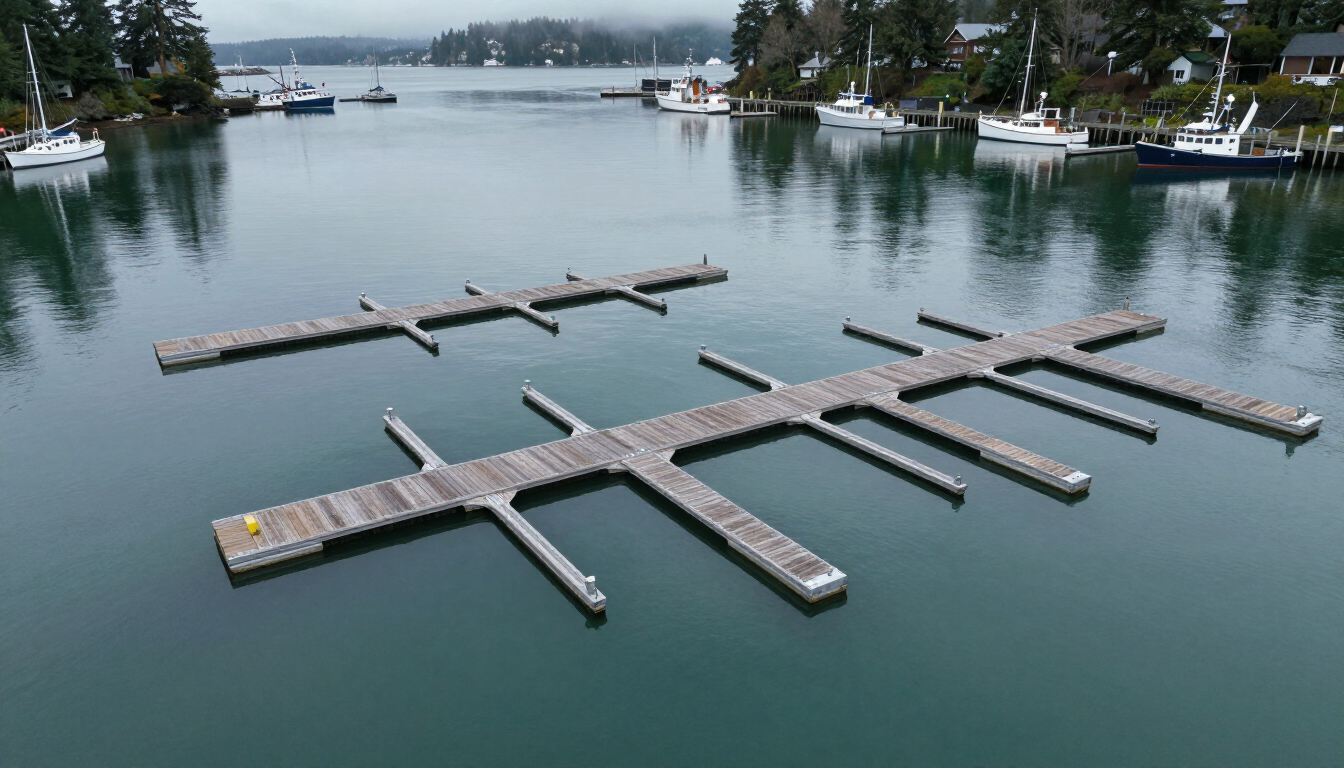
Custom Commercial Configurations
Multi-slip finger pier layouts, commercial float systems, and barge tie-up facilities designed to the vessel complement, operational load, and permitting envelope of commercial waterfront operations.
Built to Outlast the Marine Environment
Built to Outlast the Marine Environment
Material selection is what separates a dock that lasts decades from one that requires constant repairs. Every component is engineered specifically for Puget Sound's tidal, saltwater, and marine conditions.
Marine-Grade Aluminum
6061-T6 aluminum provides exceptional strength, corrosion resistance, and long-term durability for gangways and floating dock frames.
Composite Decking
UV-stabilized composite decking delivers slip resistance, low maintenance, and long-lasting performance without the drawbacks of treated lumber.
Marine Hardware
316 stainless steel and hot-dip galvanized fasteners are selected for continuous saltwater exposure, ensuring reliable structural performance.
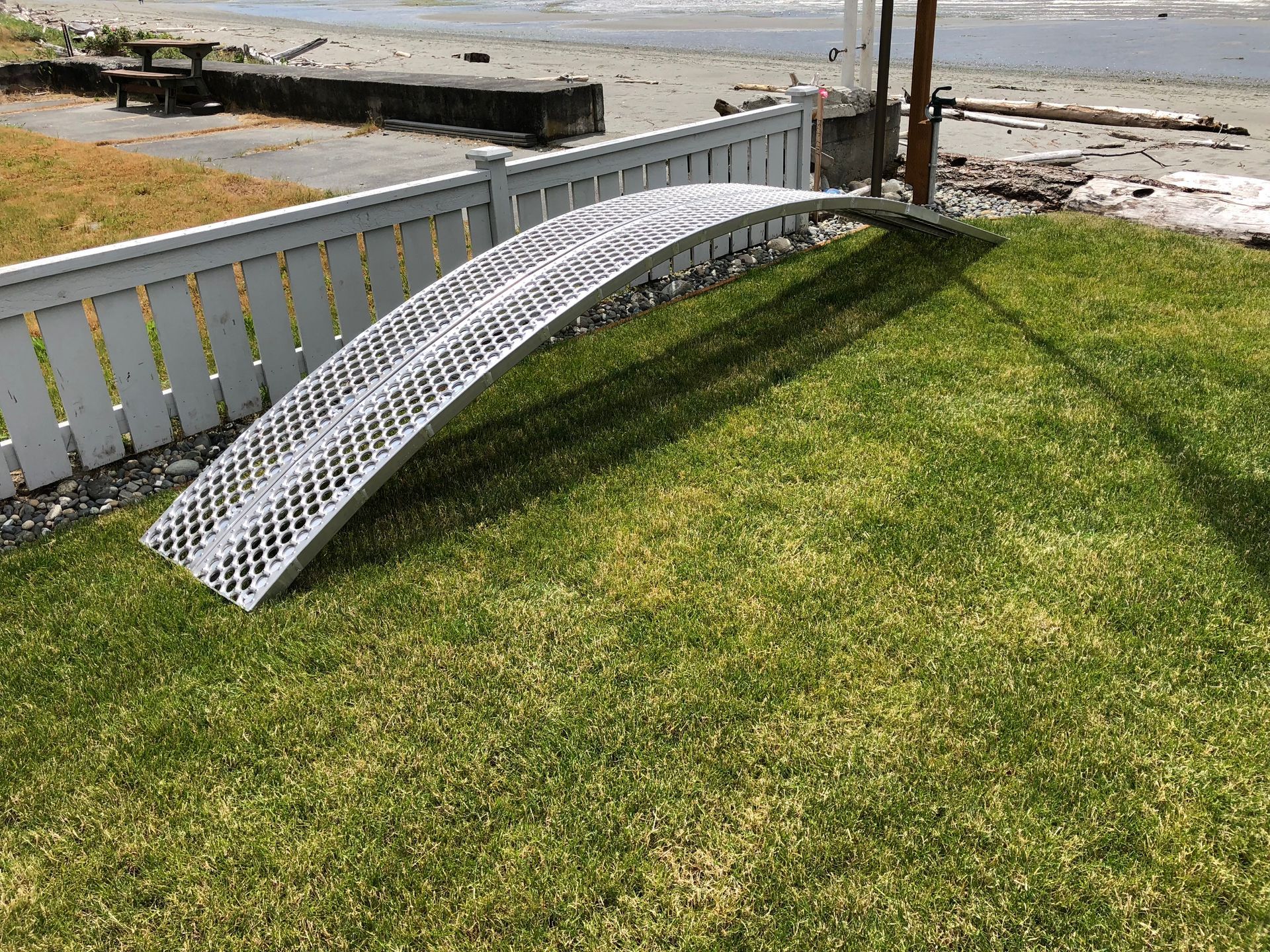
Project Portfolio
Completed dock and gangway projects across Whidbey Island and Puget Sound, showcasing residential and commercial waterfront construction.
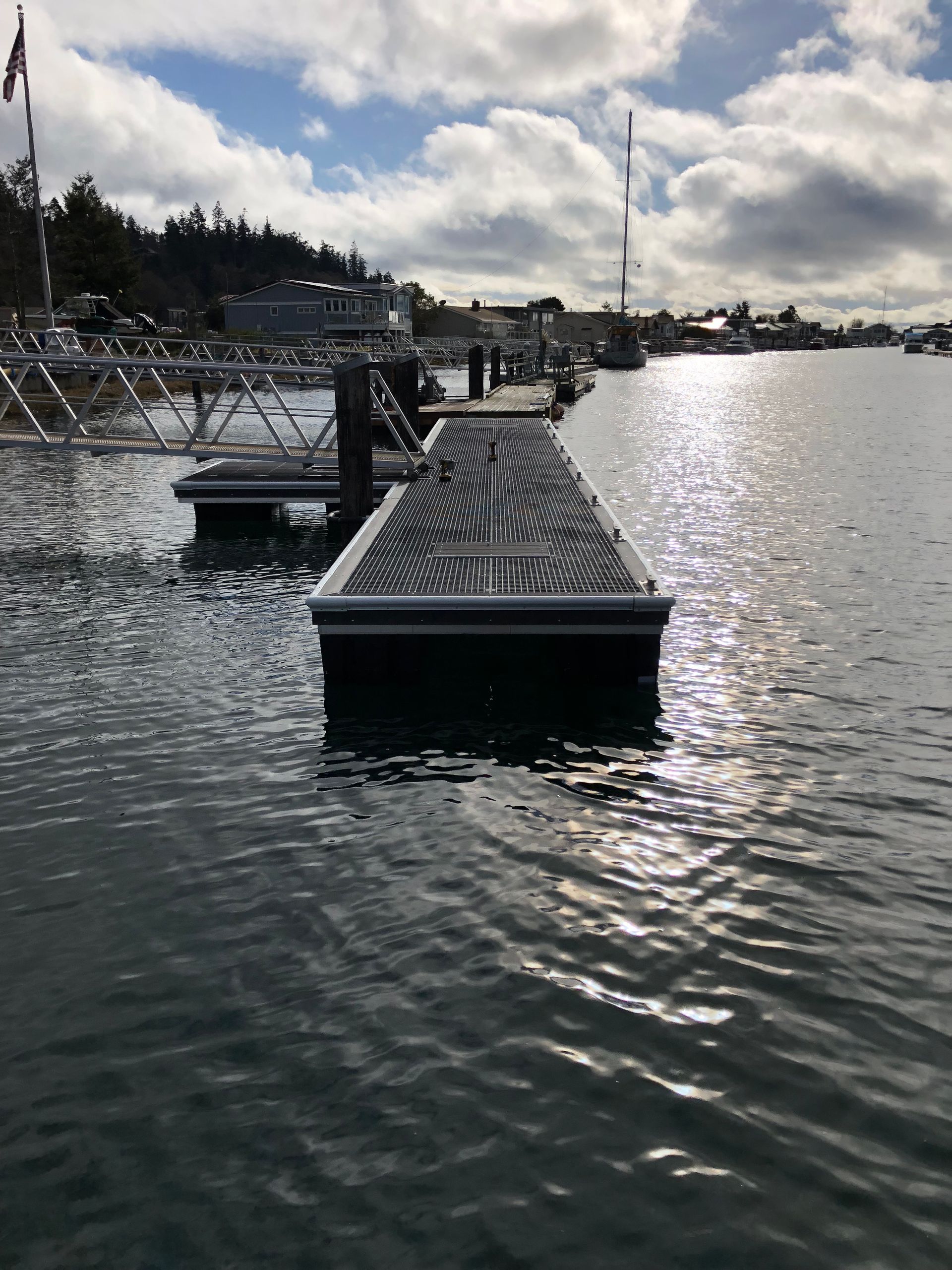
Whidbey Island

Whidbey Island
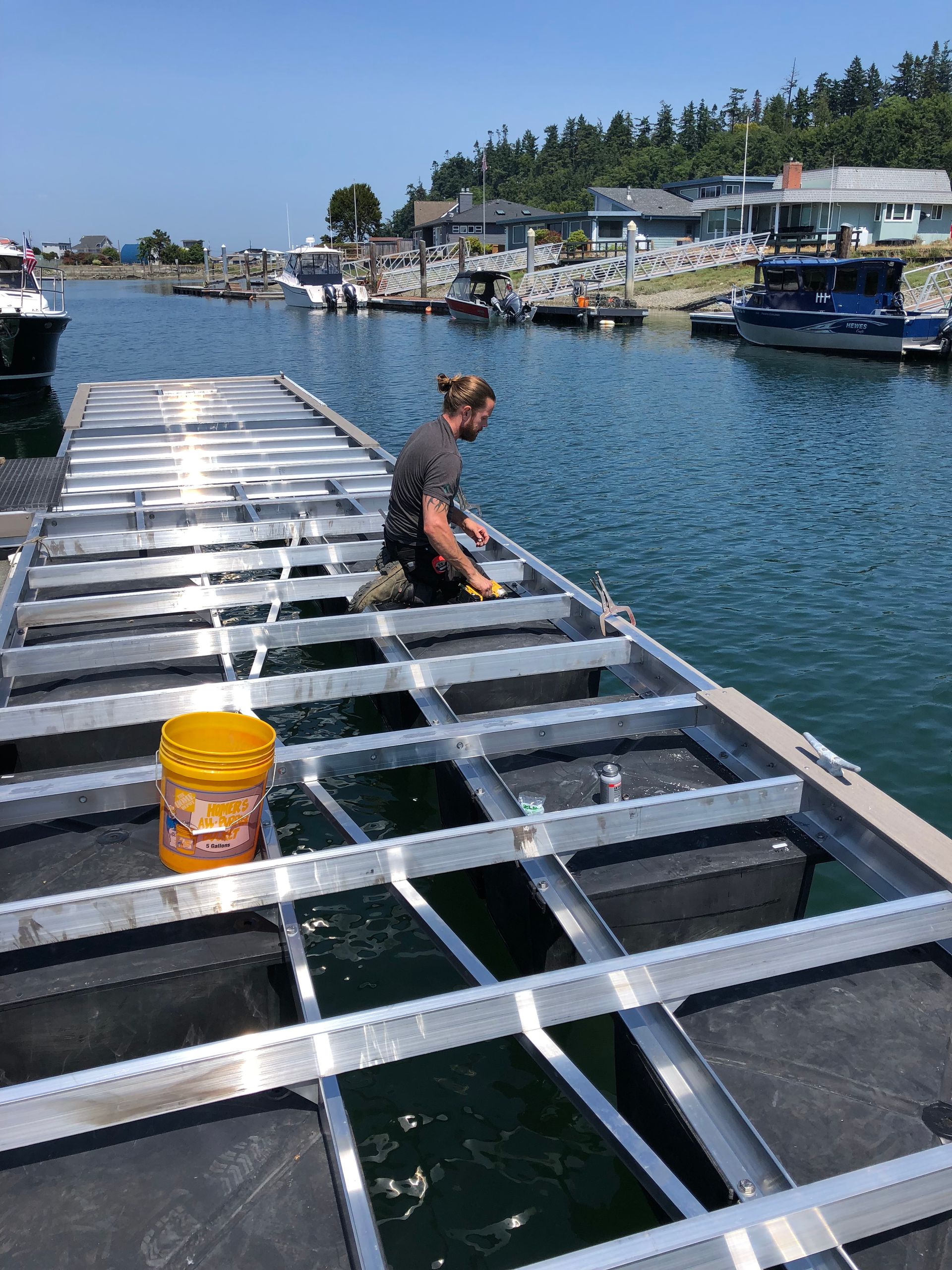
Whidbey Island
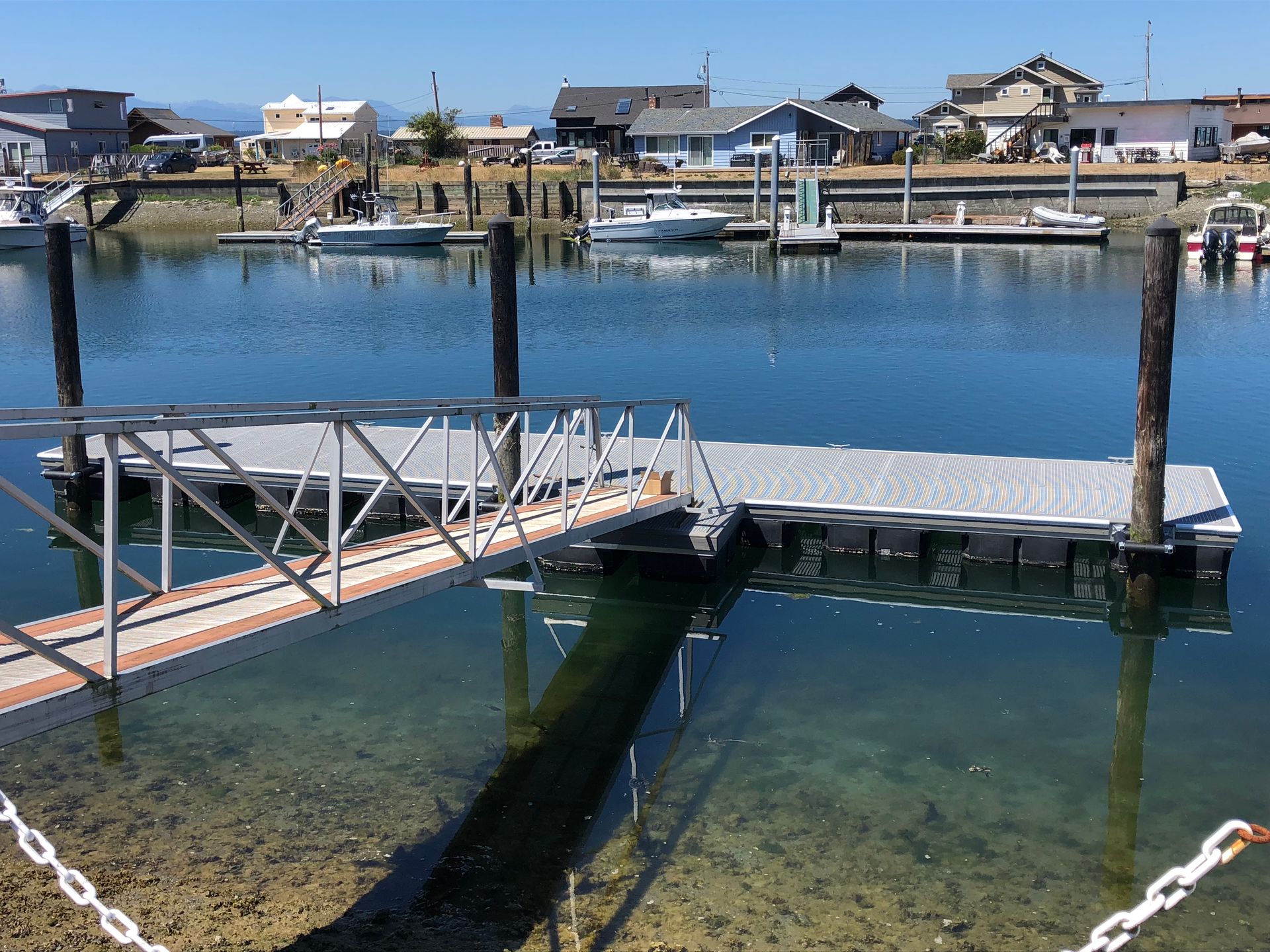
Whidbey Island
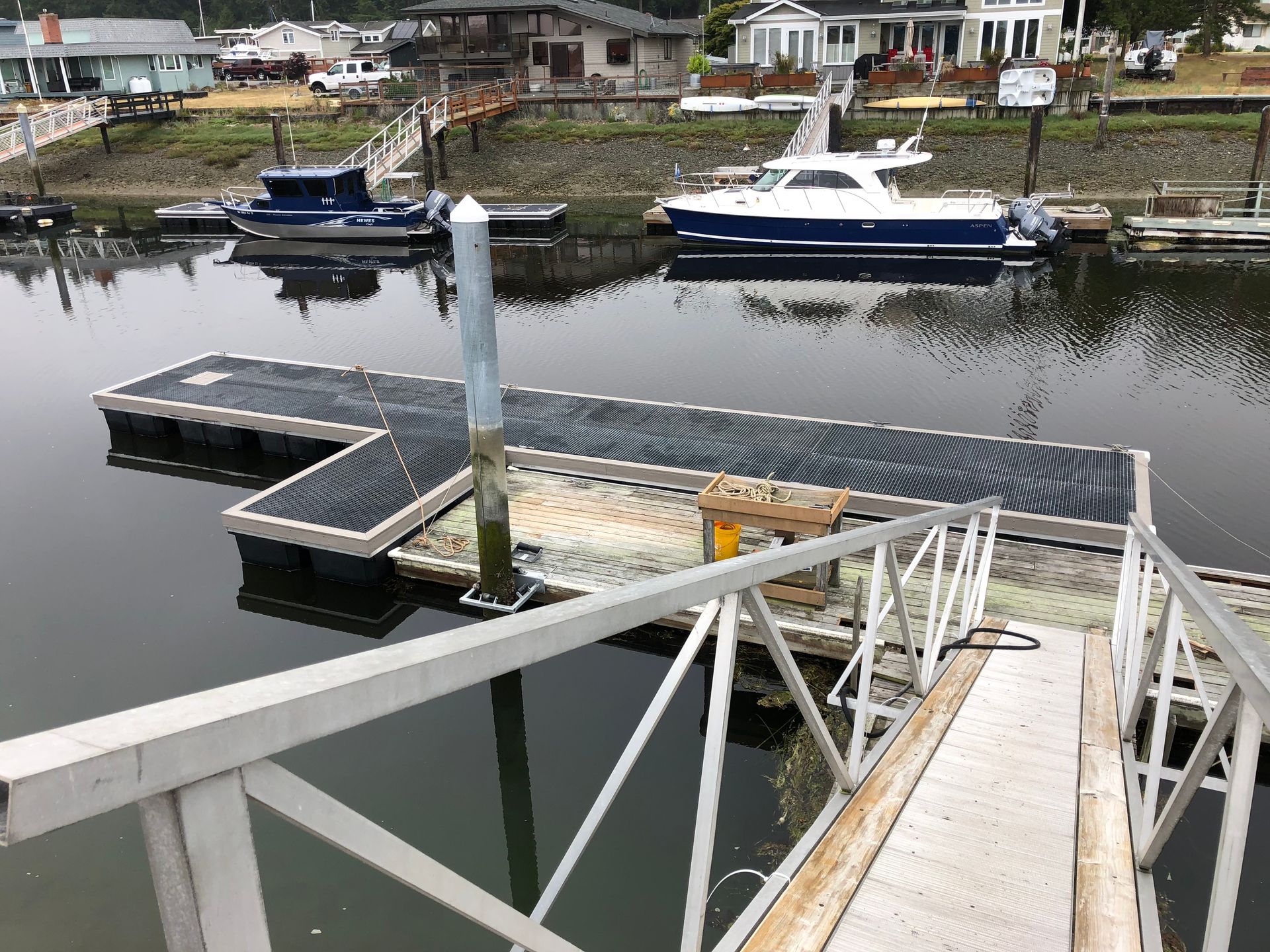
Whidbey Island
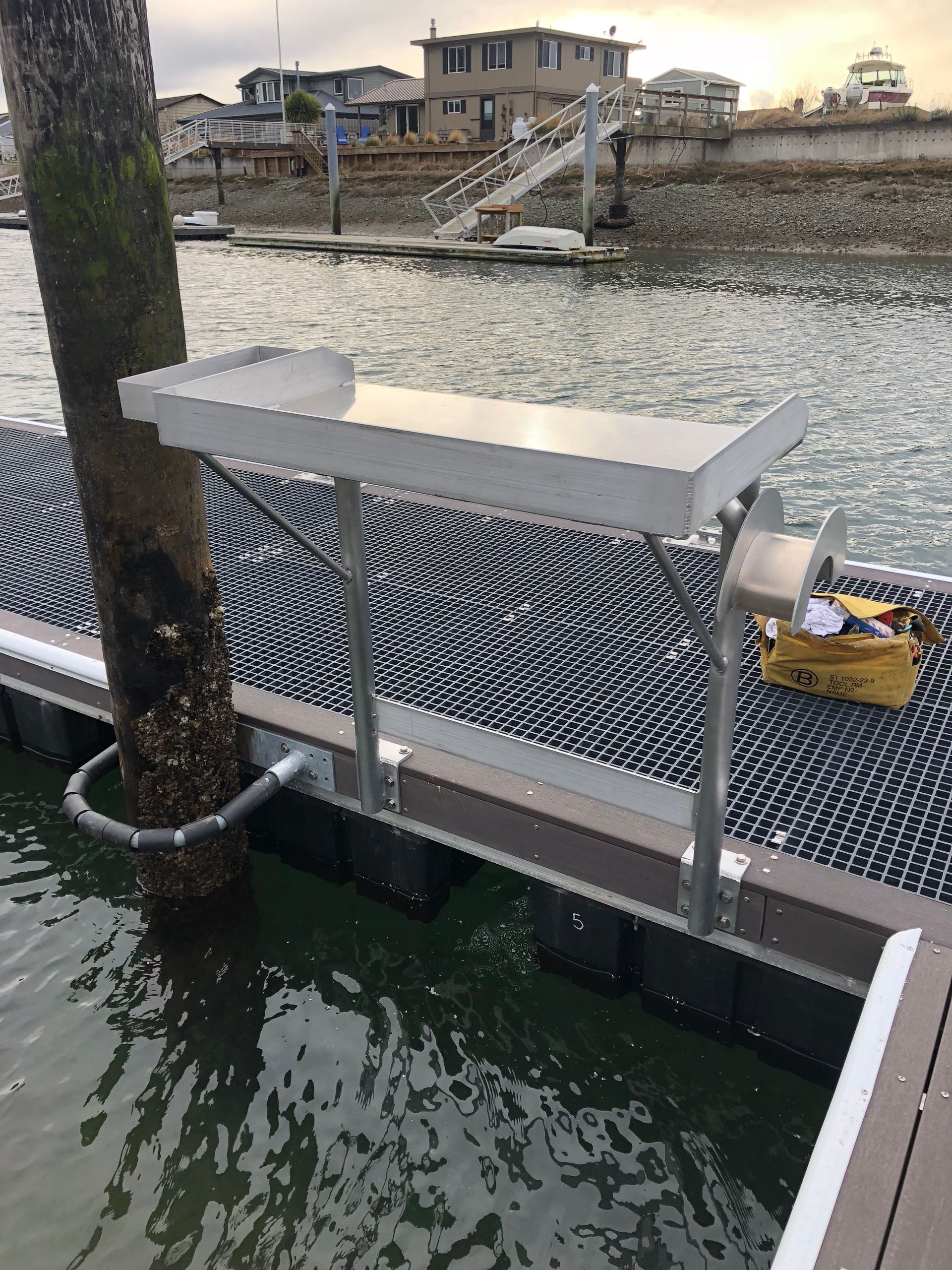
Whidbey Island
Frequently Asked Questions About Docks & Gangways
Waterfront property owners planning a dock project typically have questions about permitting, cost drivers, and how a dock system is engineered to handle Puget Sound conditions. The most common questions are addressed below.
What permits are required to build a dock in Washington State?
Most docks and piers in Puget Sound require a Hydraulic Project Approval (HPA) from the Washington Department of Fish and Wildlife, a Shoreline Substantial Development Permit or Shoreline Exemption from the local jurisdiction, and in many cases a Section 404/Section 10 permit from the Army Corps of Engineers. Some projects also require a water quality certification from the Department of Ecology. Sound Slope and Shoreline coordinates permitting as part of project delivery — we are experienced with the regulatory agencies and documentation requirements specific to Whidbey Island and Island County.How does a floating dock accommodate tidal variation?
A floating dock rises and falls with the tide, remaining at the water surface regardless of tidal stage. It is connected to fixed anchor piles or spud poles via guide brackets that allow vertical movement while restraining lateral drift. The gangway connecting the dock to the fixed shore structure is hinged at both ends to accommodate changes in angle as the tide moves the float up and down. We engineer the gangway length and hinge geometry to maintain a safe walking angle across the full local tidal range.What is the expected service life of a new dock system?
A professionally engineered dock system can last 30–50 years or more, depending on the structure, materials, site conditions, and maintenance. Marine-grade aluminum, composite decking, and corrosion-resistant hardware significantly extend service life in Puget Sound's saltwater environment. Sound Slope and Shoreline designs each system for long-term durability and recommends maintenance inspections to maximize performance.
Can an existing dock be upgraded rather than fully replaced?
In many cases, yes. If the pile foundation is sound and the framing is structurally adequate, it is often economical to replace the decking surface, upgrade hardware, and add or replace the gangway rather than reconstruct the entire structure. Sound Slope and Shoreline performs condition assessments on existing dock systems to determine the most cost-effective path to a safe, code-compliant, long-service structure.Does my dock need to comply with ADA accessibility requirements?
Commercial docks and those associated with public access facilities are generally subject to ADA accessibility requirements, including gangway slope limits, handrail specifications, and surface texture standards. Residential private docks are typically not subject to ADA, but many residential clients request accessible design for household members or guests with mobility considerations. We design to the applicable standard for the project type and flag accessibility considerations during the design phase.
Ready to Plan Your Dock or Gangway Project?
Sound Slope and Shoreline combines marine construction expertise, local permitting knowledge, and decades of waterfront experience. Contact our team to discuss your project, evaluate your site, and schedule a professional assessment.